Wild Swimming in Wales: A Guide to the Llŷn Peninsula
There's something about swimming wild and free in the sea that a pool simply cannot replicate. The cold shock of it. The salt. The way everything that was bothering you twenty minutes ago seems to dissolve somewhere between the shore and the second wave.
Wild swimming has had something of a moment in recent years. And if you ask us, the Llŷn Peninsula might be where it shines brightest in Wales. Miles of coastline, water that's clearer than you'd expect (very much Mediterranean-looking on a hot day!), and a string of beaches that range from gently sheltered to properly, thrillingly wild. There's something here for every level of daring.
Here's our guide to the best spots.
Porthdinllaen
If you had to design the perfect wild swimming destination, you might end up with something close to Porthdinllaen.
It's a tiny former fishing village on the north coast of the peninsula, owned almost entirely by the National Trust. There are no roads in. You walk across the beach from Morfa Nefyn or across the golf course on the headland, which immediately sets the tone. This is a place you have to earn slightly, and it rewards you for it.
The bay is sheltered and south-facing, with fine sandy beaches and water clear enough to see straight to the bottom. The headland is home to one of the largest seagrass meadows in North Wales, and grey seals are regular visitors. Bring goggles and look down - it's worth it!
And here's the thing that makes it one of a kind: the Tŷ Coch Inn sits right on the waterside and has been voted one of the top ten beach bars in the world. You swim, you warm up in the sun, you have a pint with your feet in the sand. As post-swim rituals go, it takes some beating.
Getting there: Park at the National Trust car park in Morfa Nefyn and walk along the beach. Not lifeguarded, so swim within your limits.

Porthdinllaen in summer
Porthor (Whistling Sands)
Porthor sits on the north-western tip of the peninsula, and it earns its name! The grains of sand here squeak underfoot, piping shrill notes when the wind blows in from the west. It's the kind of detail that sounds made up until you experience it yourself.
The beach is framed by grass-covered headlands and has that wild, remote feel that the north coast of the Llŷn does so well. It's also a National Trust beach, which keeps it beautifully managed without feeling overdone. There's a small café on site for when you surface from the water and immediately want a hot drink, as you always do.
The swimming here is exhilarating rather than gentle. The water is clear and the setting is stunning, but it's exposed to the Atlantic and conditions can change. Check the forecast before you go, and if you're not a confident sea swimmer, pick a calm day.
Getting there: Signed from the B4413. National Trust car park on site. Small café and toilets available.
Porth Iago
Porth Iago might be the Llŷn's most talked-about beach right now, and with good reason. Lonely Planet named it the best wild camping beach in Wales, and the Sunday Times called it the Llŷn Peninsula's prettiest beach. High praise, and honestly, fair.
It's a small, west-facing cove tucked into the north-western coastline, with white sand and water that turns the kind of turquoise you'd normally associate with somewhere significantly warmer. Dramatic cliffs frame the beach on either side, and the sheltered shoreline keeps the water calm enough for a peaceful swim.
Access is part of the charm - you reach it through a working farm, down a steep path to the cove below. It's a little bit of an adventure to get there, which means it rarely gets truly overrun. And there's a campsite above the beach if you want to make a night of it! Watching the sun go down over Cardigan Bay from here is the kind of thing that stays with you.
There's also a small tidal pool near the beach that's perfect for little ones to splash around in, which makes it a brilliant family option.
Getting there: Follow signs through the village of Tudweiliog and then through the farm track to the car park. Day parking available. Note the steep descent to the beach, which is worth knowing about if you're bringing young children or a lot of kit.

Whistling Sands from the headland
Llanbedrog Beach
We might be a little biased here. It's on our doorstep, after all. But Llanbedrog genuinely is one of the best spots on the peninsula for a sea swim, particularly if you want something sheltered, gentle, and reliably pleasant. Not to mention the large, buoyed-off swimming area that ensures no boat ventures too far in when you’re going for a dip.
The beach faces south (there’s a theme here!), which means it catches the sun all day and the water is as calm as you'll find on the Llŷn. It's shallow for a good stretch, which makes it ideal for families or anyone who wants to ease themselves in at their own pace. And the beach bar at the far end of the sand means you can reward yourself immediately - what’s not to love?
If you're staying at Tawelfor, it's a three-minute walk from the front door. Morning dips before breakfast are, we'd argue, one of the better ways to start a day.
Getting there: Follow signs to Llanbedrog Beach from the village. Car park on site. Seasonal lifeguard cover in summer.
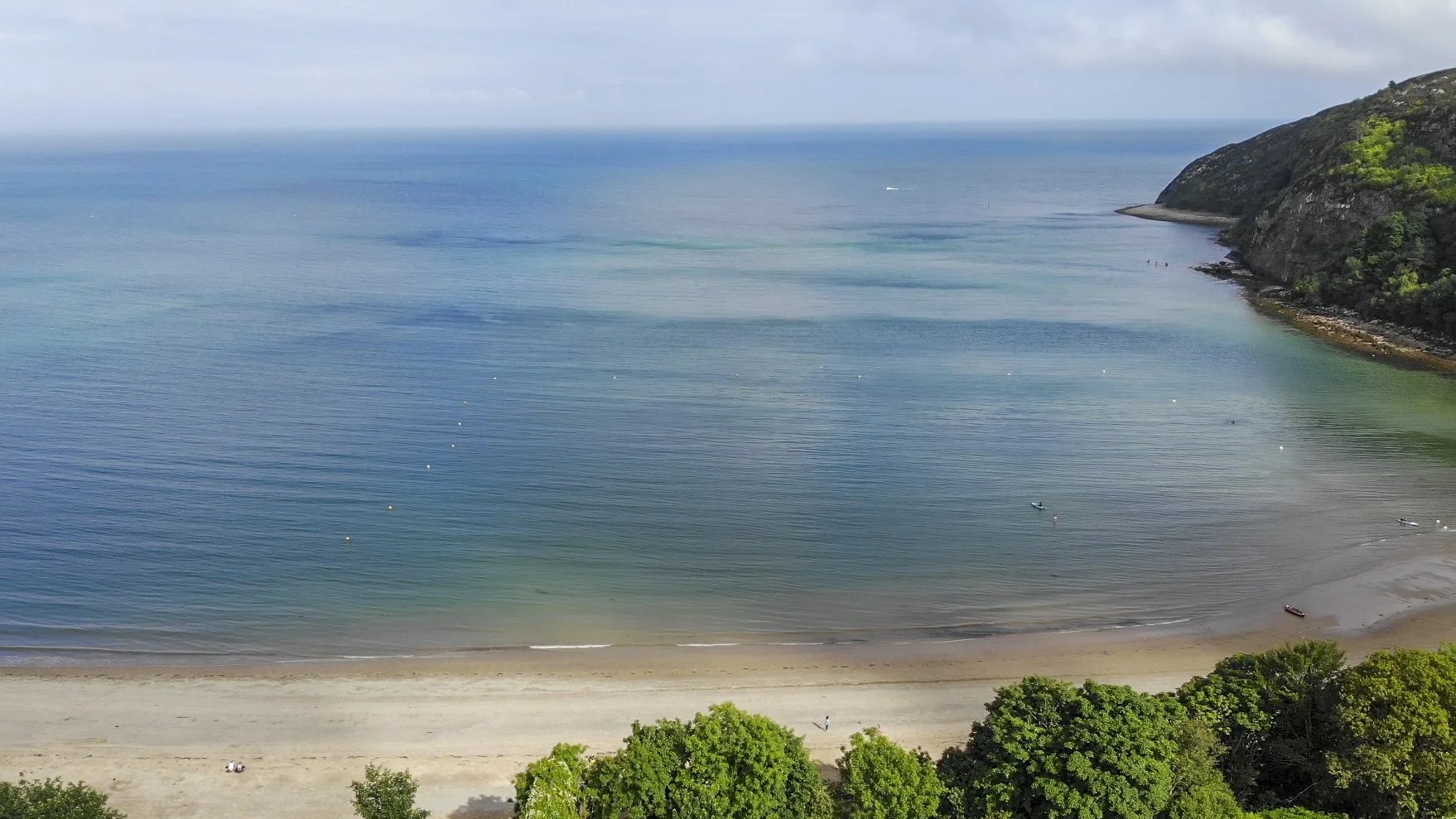
Llanbedrog Beach from above
Porth Neigwl (Hell's Mouth)
This one is for the brave. Or the surfers. Or the people who like to stand at the edge of something vast and feel properly alive.
Porth Neigwl, better known as Hell's Mouth, is a wide, sweeping bay on the south coast of the peninsula, fully exposed to the Atlantic swell. It catches the waves that have travelled thousands of miles unimpeded, which is why it's one of the most popular surf spots in North Wales. The water is powerful and the rip currents can be strong.
But it's also extraordinary. The beach stretches for miles, the skies above it are cinematic, and even on a wild day when swimming isn't wise, walking its length and watching the waves come in is an experience all of its own.
If you do fancy a dip here, go on a calm day, swim close to the shore, and don't underestimate it. Plus, brushing up on your riptide safety never hurts.
Getting there: Signed from the B4413 near Abersoch. Large car park. Not lifeguarded.
A few things worth knowing before you go
Wild swimming on the Llŷn Peninsula is wonderful, and it's also something to approach with a little thought. Like all open water swimming.
The water is cold. Even in July and August, the Irish Sea is bracing! The Llŷn's microclimate means it's milder than much of Wales, but still. A wetsuit will extend your time in the water considerably and makes the whole experience a lot more comfortable. A brightly coloured swim cap is also useful for visibility.
None of these beaches are lifeguarded year-round. Porthor and Llanbedrog have seasonal lifeguard cover in summer, but always check before you go. Swim within your abilities and, where possible, with someone else.
Check the tides and forecast. Conditions on the Llŷn can change quickly, particularly on the exposed north and west-facing beaches. A calm morning can become a choppy afternoon. The Met Office has good coastal forecasts and it's worth five minutes of your time.
Leave it as you found it. The Llŷn's coastline is as pristine as it is because people have looked after it. Take everything home with you, and use reef-safe or biodegradable sun cream if you can, particularly at spots like Porthdinllaen with important marine habitats beneath the surface.
There's something that happens when you swim in open water somewhere breathtakingly beautiful. It's hard to put your finger on exactly. Something between exhilaration and calm, which shouldn't quite work but does.
The Llŷn Peninsula has that in abundance. We hope you get to feel it for yourself!
Charlotte x
Planning a stay on the Llŷn Peninsula? You might also like: